
Components of a Great Resume
Six seconds. As I mentioned previously, that’s how much time, on average, recruiters spend scanning a resume before deciding whether to move on to the next candidate. With such a limited opportunity to make a positive impression, every little detail counts, from what you include (or leave off) to the order in which you present it.
This lesson is all about getting those details right and assembling a resume that makes a powerful impression – fast.
Insider Tip
Stick to common headings like “Experience,” “Education,” and “Skills.” The easier it is for the viewer to comprehend, the better.
1. Contact information
Your contact information might seem like the simplest part of your resume, but it’s the direct line between you and potential employers. The last thing you want is to miss out on an opportunity because of a typo, outdated details, or unprofessional presentation. Here’s how to set it up correctly so your future boss knows exactly how to get in touch.
What to include in your contact information
Your name
Always use the name you go by in professional settings. If you have a preferred nickname, include it in quotes like this: Jonathan “Jon” Doe.
Insider Tip
Make sure your name is consistent across your resume, cover letter, email, and LinkedIn profile. Inconsistencies can confuse hiring managers and even impact background checks.
Your target job title
Below your name, include the title of the job you’re pursuing or the title that best reflects your experience. It gives employers an immediate snapshot of who you are as a candidate.
Phone number
List a reliable number where you can be easily reached. Most importantly, make sure your voicemail greeting is professional and to the point.
Don’t
Don’t use casual language, jokes, or any slang in your voicemail greeting. It might seem like a small detail, but it can make or break your first impression.
Email address
Your email address should be simple and professional, ideally using your full name. Something like “[email protected]” works perfectly.
Don’t
Don’t use unprofessional or playful email addresses like “[email protected]” or “[email protected].” It looks immature and could take you out of the running immediately.
LinkedIn profile
Include a link to your LinkedIn profile to make it easy for employers to check out your professional background and endorsements.
Insider Tip
Make sure your LinkedIn profile is up-to-date and mirrors your resume. Inconsistent details between the two can raise red flags with recruiters.
City, state, and zip code
Include your city, state, and zip code, but skip the full street address. Employers don’t need to know exactly where you live—just your general location for geographic filtering purposes.
Don’t
Don’t forget to include your zip code, as recruiters may use it when searching for candidates in a specific geography.
Online portfolio (optional)
If applicable, include a link to your online portfolio or website where employers can see your work samples. This is especially relevant for creative roles like designers, writers, and marketers. Here is an example:
Don’t
Don’t include your portfolio link unless it’s polished and relevant. An incomplete or outdated portfolio does more harm than good.
Key Takeaways
- Use your professional name consistently across all documents.
- Include a clear job title that reflects the position you’re pursuing.
- Provide a reliable phone number with a professional voicemail greeting.
- Keep your email address simple and professional.
- Add your LinkedIn profile, making sure it’s up-to-date and matches your resume.
- List your city and zip code, not your full home address.
- Include an online portfolio if it’s relevant and polished.
2. Objective statement
An objective statement tells the reader what job you’re looking for and why you’re a great fit. Unlike a summary, which focuses on your experience and skills, an objective statement is about your career goals and how you’re positioning yourself as the right match for the role. Early in your career, it’s a perfect way to highlight your education, the job you want, and why the company should hire you. You can keep it simple, but it should still pack a punch.
A great objective statement starts with who you are (a young professional), what you’re looking for (the job title or type), and why you’re the right person for the job. Include the company’s name and the specific job title you’re applying to when possible. Be sure to mention any relevant skills or experience that make you a standout candidate, like internships, coursework, or specific tools you’ve mastered. And remember, it’s meant to be short and sweet—ideally 3 sentences. Here’s an example:
Insider Tip
Focus on the future. Your objective should clearly state your career goals, not just rehash your resume.
Key Takeaways
- A solid objective statement is a great way for young professionals to let potential employers know exactly what they’re looking for and why they’re a match.
- Keep it tailored, concise, and focused on why you’d be an asset to the company.
- Use it to highlight the skills and experience that set you apart.
3. Education
Your education is one of your strongest assets, especially early in your career. While you may not have a ton of professional experience yet, your academic background can tell employers a lot about your potential. The key is to position this section on your resume to showcase your qualifications in the best possible light.
Insider Tip
Keeping your education at or near the top of your resume is important since it immediately explains why your professional experience might be limited (or even non-existent). As you climb the career ladder and rack up more career wins, this section becomes less relevant and can be moved toward the end of your resume.
What to include in your education section
Your education section should be detailed and include the following elements:
Degree(s) earned
Clearly state the degree(s) you have earned—Bachelor of Science, Bachelor of Arts, you name it.
Institution name
Include the full name of the university or college where you earned your degree.
Graduation date
List the month and year you earned your degree(s). If you are still in school, include your expected graduation date.
Don’t
Don’t list vague dates like “2024” without specifying the month. Employers might assume you’re still in school if you’re not clear.
Major and minor
Let them know your major; throw in your minor, too, if you have one.
GPA (if above 3.5)
Got a high GPA? Flaunt it. If not, no stress—just skip it.
Insider Tip
Employers usually won’t ask about your GPA unless it’s a major component of the job (like applying for grad school or a select number of entry-level positions).
Relevant coursework and projects
Highlight a few courses or class projects that match the job you want. Show them you’ve got the skills and background they need.
Don’t
Don’t list irrelevant classes just to fill space. Stick to the ones that strengthen your candidacy.
Study abroad experience
If you studied abroad, this can make for an interesting talking point in interviews. It shows adaptability and a willingness to experience new environments.
Honors and awards
Did you make the Dean’s List or snag a scholarship? Mention any academic honors or awards you’ve received.
Extracurricular activities
Include relevant activities demonstrating skills or leadership, like clubs, sports, or volunteer work.
Insider Tip
If you held leadership roles in any extracurriculars, mention them. Leadership experience can be just as important as academic performance.
Education section samples
Here are several examples of how to format the education section on your resume. Each example is tailored for different situations someone early in their career might encounter.
Example 1: Standard education section
Example 2: Highlighting a major and minor
Example 3: Highlighting a double major
Example 4: Highlighting honors and awards
Example 5: Including relevant projects
Example 6: Including study abroad experience
Example 7: Graduate education
Example 8: Including professional associations
Key Takeaways
- Place your education near the top of your resume, especially if you’ve recently graduated or are still in school.
- Be specific when listing your degree, major, and graduation date—don’t leave employers guessing.
- Include relevant coursework to show employers that your academic background aligns with the job you’re applying for.
- Highlight academic achievements like honors, awards, and extracurricular activities to show you’re well-rounded and ambitious.
4. Experience
When you’re starting out, it’s easy to worry that your lack of full-time professional experience might hold you back. But here’s the truth: your internships, part-time jobs, volunteer work, school projects, and personal endeavors can be just as valuable to an employer. It’s all about how you present them.
I’ll show you how to take the experience you’ve already gained and frame it in a way that catches the attention of hiring managers. You’ve done more than you realize, and now’s the time to let that shine on your resume.
What to include in your experience section
Your experience section should give employers a clear picture of your capabilities by focusing on roles and projects that showcase your skills. The key is to prioritize the most relevant experiences to the job you’re applying for, but even unrelated jobs can tell a story about your work ethic and transferable skills.
Relevant jobs and internships
Whenever possible, highlight specific achievements, not just tasks. Show how you applied what you’ve learned and the results you delivered. For example:
Insider Tip
Always quantify your results when possible. Numbers speak louder than words and help employers visualize the impact you made.
Relevant school projects
School projects can show off your technical skills, creativity, and ability to manage a project from start to finish. If the project ties into the type of work you want to do, make sure to explain how it does. Here’s an example:
Don’t
Don’t just list “completed a project.” Instead, explain what the project was, your role in it, and what the final result was. This gives employers context and shows off your initiative.
Volunteer work
Volunteer work can be a great way to demonstrate leadership, organization, and commitment to your community. Plus, it’s often just as impactful as formal work experience. Something like this:
Insider Tip
Volunteer work doesn’t need to be directly related to your field. If it showcases leadership, communication, or problem-solving, it’s worth highlighting.
Personal projects
If you’ve worked on a personal project that’s relevant to your career path, include it. This shows initiative and passion, which employers love to see. Whether building an app, writing a blog, or managing a side business, these experiences can be as valuable as formal jobs. For example:
Don’t
Don’t overlook your personal projects just because they weren’t paid experiences. If they demonstrate relevant skills, they’re worth mentioning.
Non-relevant part-time jobs
Even jobs that aren’t directly related to your desired career can still show valuable soft skills. Employers care about work ethic, communication, and the ability to handle responsibility—skills you can gain from any job. For instance:
Insider Tip
Use action verbs like “led,” “managed,” “developed,” or “improved” to describe your responsibilities. Doing so makes your contributions sound more impactful. We cover them in detail here.
Seasonal jobs
Summer and seasonal positions are great for showing that you were productive during school breaks. These jobs often provide opportunities to showcase leadership, teamwork, and problem-solving. To give you an idea:
Don’t
Don’t list duties rather than accomplishments. Employers already know the general duties of a job based on the title. They want to see what you did differently and what impact you made. Instead of saying, “Answered customer calls,” try “Resolved 90% of customer inquiries on first contact, reducing response times by 20%.”
Insider Tip
If you’re struggling to turn a duty into an accomplishment, think about what you were praised for in performance reviews or what made you feel proud of the work you did.
Key Takeaways
- Focus on achievements over responsibilities. Highlight measurable results wherever possible.
- Use a variety of experiences: jobs, internships, projects, and volunteer work all count.
- Quantify your contributions to show the impact you made, even if it was in a part-time or unrelated job.
- Tailor your experience to the job you’re applying for. The more relevant your examples, the stronger your resume will be.
5. Skills
Your resume’s skills section is like your personal highlight reel—it’s where you can showcase your abilities and catch the attention of potential employers. Especially when you’re starting out, the skills you’ve picked up from school, internships, and other real-world experiences can make all the difference. I’ll show you how to organize and present your skills in a way that really sets you apart.
Where to place your skills section
You have some flexibility here. If your skills are a major strength (and your experience is still developing), you can place this section at the top of your resume. On the other hand, if your work experience is a strong selling point, your skills section might work better below that. The key is to put your best foot forward by leading with what makes the most impact.
Insider Tip
Always position your most impressive and relevant information near the top of your resume. If your technical skills will help you stand out, don’t bury them.
Why the skills section is important
Your list of skills can do a lot of heavy lifting for you. Presented properly, this section can:
Satisfy minimum requirements
Listing specific skills helps show employers that you meet the basic qualifications for the role, especially if your background doesn’t make it obvious.
Show specialization
Certain jobs require specialized skills. Whether you’re great at coding, design, or analysis, this section is where you highlight your areas of expertise and stand out from the crowd.
Highlight additional capabilities
You’re not just checking boxes—you’re showing off what makes you unique. Your skills section is a chance to point out capabilities beyond the basic requirements.
Make the machines happy
Many companies use applicant tracking systems (ATS) to scan resumes for relevant skills and keywords. By using the right words in your skills section, you increase your chances of getting past the system and in front of a real person.
Applicant tracking system (ATS): Software used by companies to screen resumes for specific keywords, such as skills or qualifications, in order to streamline the hiring process.
How to format your skills section
To make your skills easy to read, use a bulleted list. You can also group similar skills under headers like “Technical Skills” and “Soft Skills” for better organization. Here’s how to structure it:
Insider Tip
Keep the format simple and clean. Bullet points make your skills quick to scan, and grouping them by category helps recruiters find what they’re looking for.
How to write a resume skills section
Quality beats quantity. Your skills section should match the top requirements listed in the job description—always customize it accordingly, incorporating the top requirements listed in the job description where possible. Here’s an example of how to do this using a job description for an HR call center rep:
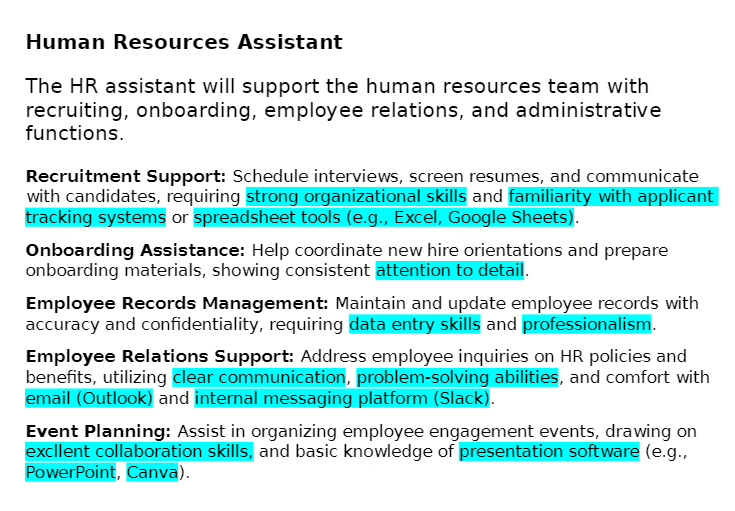
The core duties of the job are highlighted in blue. If you were applying for this job, you’d want to include any of the skills you possess, like:
- Organizational skills
- Applicant tracking systems
- Spreadsheets (Excel and/or Google Sheets)
- Attention to detail
- Data entry
- Communication
- Problem-solving
- Outlook
- Slack
- PowerPoint
- Canva
Translate job responsibilities into skills
Don’t confuse job duties with skills. Instead of listing tasks, break them down into the skills required to perform those tasks. For example:
This approach makes your skills more impactful and shows how they directly relate to the job.
Include various skill types
Your skills section can include soft skills, especially if the role relies heavily on them. However, keep everything relevant—don’t clutter your resume with skills that won’t help you get the job. Here’s the difference:
Technical skills
These are your hard, job-specific skills—things like coding, software proficiency, and specific tools.
Soft skills
These are equally important for many jobs and include things like teamwork, communication, and leadership.
Don’t
Don’t overshare. Avoid listing skills that don’t apply to the job. For example, including “JavaScript” for a customer service role is more distracting than helpful.
Resume skills section examples
Here are a few examples based on different job types:
Example 1: Project manager for a logistics company
Example 2: Junior financial analyst for an insurance company
Example 3: Social media manager for a tech company
Things to avoid listing
- Irrelevant skills: Including skills that don’t relate to the job will only clutter your resume. Stick to skills that apply directly to the role you’re aiming for.
- Overused buzzwords: Saying you’re “hard-working” doesn’t add much value. Instead, focus on specific, actionable skills.
- Outdated skills: Leave out obsolete technologies or processes. Employers want to know you’re up-to-date with the latest tools and methods.
- Basic computer skills: You don’t need to list skills like “Microsoft Word” or “email”—these are assumed. Instead, highlight more advanced technical skills that set you apart.
- Skills you don’t have: Be honest. Don’t list skills you’re not proficient in, as you might be tested during the interview process.
Key Takeaways
- Use specific keywords and phrases from the job description to improve your chances of ranking high in the ATS and the viewer’s mind.
- Include a mix of technical and soft skills to show you’re a well-rounded candidate.
- Don’t list irrelevant or outdated skills—stick to what’s useful for the job you want.
6. Optional components
While the core components covered above are essential, you may want to add extra details that highlight your strengths and boost your candidacy. These may include certifications, awards, volunteer work, extracurricular activities, languages, etc. Since space on your resume is limited and every word counts, carefully consider whether the additional content truly enhances your profile.
Don’t
Don’t include references on your resume. Only share them on a selective basis. You can include the phrase “references are available upon request,” but even that isn’t necessary because companies that check references will ask you for them regardless.
Optional sections to consider
Certifications
Certifications show that you’ve gone beyond the basics to improve your skills and knowledge in your field. They’re a great way to demonstrate dedication and differentiate yourself from candidates without formal certifications. Here’s an example:
Insider Tip
Certifications can also help if you’re transitioning into a new field or looking to stand out in a competitive industry. Just make sure they’re relevant to the job you’re applying for.
Awards and honors
If you’ve earned awards that showcase your abilities, be sure to include them. Awards reflect your achievements and can give employers a reason to take a closer look at your resume. Such as:
Don’t
Don’t list every award you’ve ever won—especially those before college. Focus on recent and relevant awards, as these carry the most weight with employers.
Extracurricular activities
From clubs to leadership roles, extracurricular activities can show you’re more than just your grades. This section is ideal for demonstrating soft skills like teamwork, leadership, and time management. Here’s an example:
Don’t
Don’t list activities unless they add value. If your involvement is minimal or irrelevant to the job, it’s better to leave it off.
Athletics
If you participated in athletics, this can be a great way to demonstrate discipline, teamwork, and leadership—qualities that employers highly value. For example:
Insider Tip
Being involved in athletics shows dedication and the ability to manage multiple commitments, which employers appreciate.
Personal projects
If you’ve worked on personal projects that demonstrate relevant skills, don’t hesitate to include them. Personal projects can highlight initiative, problem-solving abilities, and passion for your field. As an example:
Don’t
Don’t list projects that are unfinished or irrelevant to the job. Focus on completed projects that clearly demonstrate skills and initiative.
Key Takeaways
- Add value: Optional sections can enhance your resume by showcasing skills and experiences beyond academics and internships.
- Tailor and prioritize: Only include sections that strengthen your candidacy and keep them near the top if they’re particularly impressive or relevant.
- Be concise: Focus on the most impactful details to keep your resume sharp and focused.
- Organize effectively: Use clear headings and bullet points to make it easy for hiring managers to scan through and find what matters.