How to Be Found
With over a billion profiles, simply having an account on LinkedIn isn’t enough; you need to stand out and get noticed. Tens of thousands of recruiters use LinkedIn daily to find candidates for open positions. If your profile is optimized, your chances of being found increase significantly. If not, your profile may stay buried beneath the surface.
I covered a few of these points in the previous lesson, but it’s worth reiterating here to allow you to improve your profile further. It’s that important.
Craft a concise, impactful headline
Since your headline serves as the first impression recruiters get when they view your profile, it needs to accurately and clearly reflect your career status, goals, and the skills you offer.
How to write an optimized headline:
- Include your desired job title, your degree, and key skills.
- Mention that you’re a recent grad to catch the eye of recruiters looking for entry-level talent.
Insider Tip
Tailor your headline for the roles you’re eyeing to increase its relevance to recruiters.
Create a strong About section
The About section (formerly known as Summary) is one of the first things recruiters read, so it needs to quickly communicate who you are and what you’re looking for. It should mirror the objective statement on your resume and clearly indicate that you’re a recent grad ready to enter the professional world. This section lets you showcase your unique value proposition, making you stand out from other candidates.
How to write a standout About section:
- Start by stating you’re a recent graduate and mention your degree and major.
- Briefly outline your key skills and experiences that align with the roles you’re targeting.
- Highlight your career aspirations and what you hope to achieve in your first role.
- Use industry-specific keywords to improve your profile’s visibility.
- Keep it concise—3 sentences are all you need to deliver a powerful statement!
Don’t
Don’t ramble or try to tell your life story—nobody will read it. A lengthy About section will do more harm than good.
Integrate keywords throughout your profile
LinkedIn’s search engine heavily relies on keywords. By strategically placing them throughout your profile, you increase the chances of being found by recruiters looking for specific skills.
Where to place keywords:
- Experience section: Describe your roles and achievements using relevant keywords.
- Skills section: List industry-specific skills that are commonly searched. You can add up to 100 – the more you include, the better your chance of appearing in a recruiter’s search.
- About section: Use terms that reflect your desired job roles and industry.
Insider Tip
Look at job postings for your desired role to select keywords and phrases you can add throughout your profile.
Fully complete your profile
A complete profile ranks higher in LinkedIn’s search results, making it more likely that recruiters will find you. Also, LinkedIn’s algorithm favors profiles that are detailed and fully filled out.
Sections to focus on:
- Experience
- Education
- Skills
- Recommendations
- Volunteer Work
Don’t
Don’t leave any section blank—completeness is key to appearing in more searches.
Expand your network
The size and quality of your LinkedIn network influence your visibility to potential employers. The more connections you have, especially with people in your industry, the more likely it is that your profile will appear in recruiter searches.
How to build your network:
- Connect with classmates, professors, family friends, neighbors, your friends’ parents, parents’ friends, and colleagues from internships.
- Join industry-specific LinkedIn groups and connect with members.
- Connect with hiring managers and talent acquisition team members from target companies.
- Connect with recruiters in your geography and industry.
Insider Tip
Always send a personalized connection request, mentioning how you know the person or why you want to connect.
Customize your LinkedIn URL
A custom LinkedIn URL is more professional and helps your profile appear in search results more often.
Steps to customize:
- Go to your profile settings and create a URL with your name.
- Example: www.linkedin.com/in/janedoe
Don’t
Don’t settle for the default URL—it looks unprofessional and is harder to share.
Gather strong recommendations
Recommendations are social proof of your abilities and enhance your credibility.
How to request recommendations:
- Reach out to professors, internship supervisors, or colleagues who can vouch for your skills.
- Be specific about what aspects of your work or skills you’d like them to highlight.
Example 1: Requesting a recommendation from a professor
Example 2: Requesting a recommendation from an internship supervisor
Example 3: Requesting a recommendation from a colleague
Stay active and engaged
Regular activity on LinkedIn keeps your profile visible to your network and shows recruiters that you’re engaged in your profession.
How to stay active:
- Share articles or posts related to your industry.
- Comment on and react to posts from your connections.
- Regularly update your profile with new skills, experiences, or certifications.
Leverage the “Open to Work” feature
This feature lets recruiters know that you’re actively looking for job opportunities, which can increase your chances of being discovered.
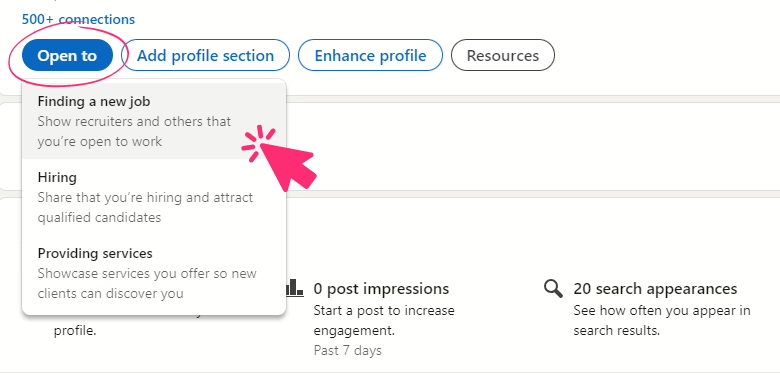
How to use it:
- Go to your profile and click on the “Open to” button under your profile photo.
- Specify the job titles you’re interested in, your preferred job locations, and the type of work you’re looking for (full-time, part-time, etc.).
Insider Tip
Use the “Open to” feature located on your profile page to indicate you’re looking for a new job!
Join industry groups and engage
Joining relevant LinkedIn groups can enhance your visibility and provide valuable networking opportunities.
Why this matters:
- Active participation in discussions can demonstrate your knowledge and interest in the industry.
- Participating in group discussions can showcase your expertise and keep you visible.
- Group memberships can expand your network and expose you to job postings.
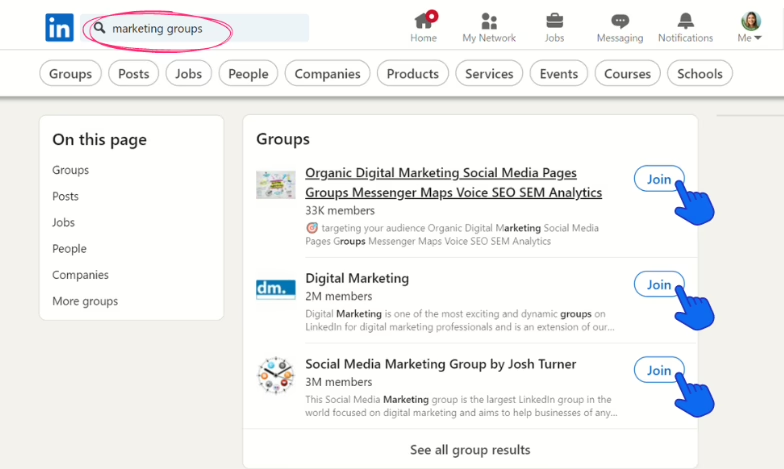
How to find industry groups:
- Use the LinkedIn search bar, typing in the name of your targeted profession, including keywords like “professional association,” “professionals,” or “group.” On the results page, you’ll see several tabs at the top, such as “People,” “Jobs,” “Posts,” etc. Click on the “Groups” tab to filter the results to show only relevant groups.
- Check out profiles of industry leaders. Often, their profiles will list the groups they are part of. You can check the “Interests” section on their profiles to see which groups they’ve joined. If someone you admire is in a group, the group is likely active and valuable.
- Browse LinkedIn group suggestions. To access these suggestions, go to the “My Network” section of LinkedIn and scroll down to the “Groups you may be interested in” section. This is a quick way to discover groups that align with your professional background and interests without manually searching.
Insider Tip
Generally speaking, the bigger, the better for groups. But more important than that is how active they are. Look for groups with a lot of shared content, active members, and posts that consistently generate a lot of engagement (i.e., comments). The most valuable groups will have a mix of questions, insights, and discussions relevant to your industry.
Key Takeaways
- Optimize your headline: Include your job title, skills, and status as a recent grad to attract recruiters.
- Use keywords: Place industry-relevant keywords throughout your profile for higher visibility.
- Complete every section: Don’t leave any part of your profile blank—full profiles rank higher.
- Engage regularly: Stay active on LinkedIn by sharing content and commenting on posts to boost your visibility.
- Expand your network: Grow your connections, especially with professionals in your field.
- Use the “Open to Work” feature: Let recruiters know you’re available for opportunities by activating this feature.